Water is stubborn. It finds seams in concrete, follows framing, and creeps in at the most inconvenient time, usually right after a deep freeze or a spring downpour. If you live in Mississauga, you already know the rhythm. Snow loads in February, thaw in March, rain through April, then one or two biblical summer storms that test every sump pump in the neighbourhood. That cycle is hard on foundations. A proper waterproofing inspection is not a sales call with a flashlight. It is a methodical assessment of how your home handles water above grade and below, inside and out, with recommendations that fit your house, not a generic brochure.
Why a real inspection matters
A basement leak is rarely a single problem. It is often a combination of hydrostatic pressure, soil type, settlement, old drain tile, window wells, and grading that sends water toward the foundation. Mississauga has a mix of clay and silt that holds moisture, and freeze thaw cycles that open microcracks. Quick fixes might stop a visible drip for one season, then fail when the frost line drops to 1.2 metres or a summer storm overwhelms old footing drains. An experienced waterproofing contractor reads the signs and the soil, then explains what will actually work for your house and budget.
In my work around Clarkson, Streetsville, and the newer subdivisions near Erin Mills, I have seen everything from hairline shrinkage cracks to full height fractures behind finished drywall. The homeowners who fare best are the ones who bring in professional waterproofing services at the first hint of musty odour or salt crust on the walls, not after the family room carpet turns into a sponge.
When to call for an inspection
There are the obvious emergencies, like water pooling on the slab or a sump pump that runs non stop after a storm. More subtle prompts include a damp line along the baseboards, bubbling paint on foundation walls, efflorescence that looks like fine white powder, musty odours after a thaw, or floor joists near the band sill taking on moisture. Even a single episode of sewer backup is worth investigating, since it often ties back to overwhelmed storm laterals or inadequate backwater protection, both of which fall under the larger umbrella of waterproofing.
If you are buying a home in Mississauga, especially one built before the 1980s, book a waterproofing inspection in addition to a general home inspection. Many older homes used clay tile for weeping systems and had little or no exterior membrane. A skilled eye can spot the telltales, estimate remaining service life, and save you a lot of guesswork.
How to prepare your home for the visit
Use the following short checklist to make the inspection efficient and thorough.
- Clear a path around the basement perimeter so the inspector can access all walls. Move stored items away from the sump pit, main water line, and any visible cracks. Note dates of leaks, heavy rain events, and when pumps or dehumidifiers ran. Take photos or videos of any past water entry, even if the area is dry now. If safe, check and record downspout extensions and where they discharge.
These small steps shave time off the visit and often surface patterns that matter. An inspector cares less about a single puddle and more about whether it appeared after a two hour thunderstorm or a three day steady rain, whether the leak is near a downspout or a window well, and whether it worsens during a thaw.
What happens during the inspection, step by step
If you have only booked one waterproofing inspection before, here is what a thorough one looks like from start to finish.
- Brief history taking. The contractor asks about leak timing, musty smells, renovations, and whether the basement is finished. Exterior walkaround. Grading, downspouts, eavestrough capacity, window wells, and visible foundation exposure get checked first. Interior assessment. The inspector uses moisture readings, checks cracks, probes baseboards or carpet edges, and confirms vapor barrier details behind finish walls where possible. Mechanical and drainage review. Sump pump size and operation, backup pump type, discharge line route, and any backwater valve or floor drain tie ins are confirmed. Findings and options. You receive a plain language summary with recommended paths, rough costs, and notes on permits where applicable.
In practice, this sequence often loops back. If an exterior downspout dumps at the footing, the inspector will check the interior at that same location. If the sump pit is bone dry even after rain, attention turns to whether you have functioning footing drains at all.
Tools you might see, and why they matter
A trustworthy inspection uses more than eyes and anecdotes. Most contractors in Mississauga carry a pin type moisture meter for finished areas and a pinless meter for foundation walls and slabs. Neither tool alone is decisive, but together they map dampness. A thermal imaging camera can catch temperature differences that hint at wet insulation or cold water paths through cracks. The best results come when the house is conditioned normally, not after you have run a dehumidifier at full blast for three days.
A small borescope helps look behind finished walls without demolition, especially near known trouble spots like below window wells. Coloured dye can trace leaks at floor drains or seams. If the home has a sump, expect the inspector to lift the lid, run the pump with a test cycle, and check for a proper check valve and an air gap where the discharge meets the outdoors. On the roof side, a simple inspection mirror and flashlight help verify eavestrough joints and downspout elbows that may be clogging and forcing overflow right at the foundation.
Exterior vs. Interior solutions, and how inspectors weigh them
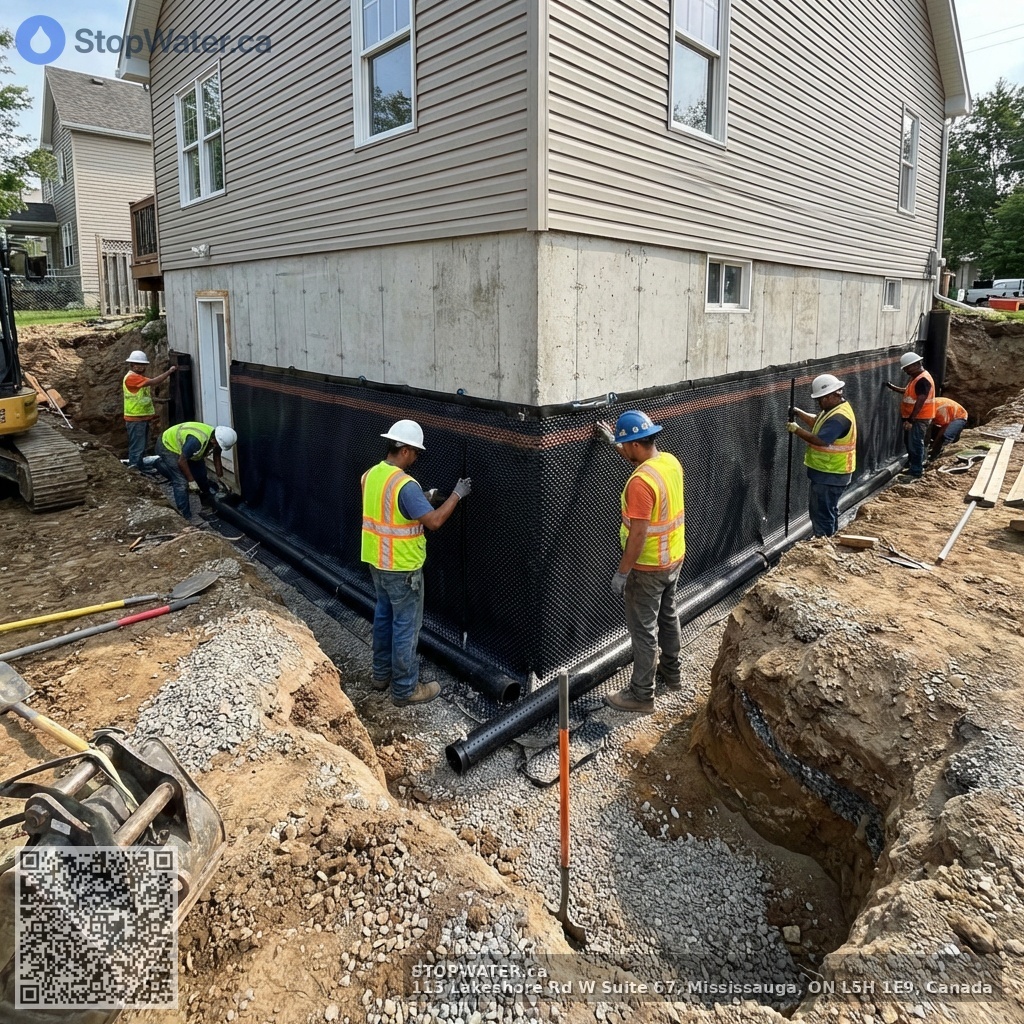
Homeowners often ask whether exterior waterproofing is always better than interior. The honest answer is, it depends. Exterior work addresses water at the source. Replacing or repairing weeping tile and adding a proper membrane and drainage board on the outside wall can reduce hydrostatic pressure and keep the foundation dry. It is usually the right choice for chronic seepage through the wall or where the footing drains have failed. That said, it requires excavation, can disrupt landscaping, and may need permits if shoring or depth thresholds are crossed. In Mississauga, you or your contractor should verify with Building Services whether a building permit is needed for your specific scope, and plumbing permits are typically required for any new backwater valve installation.
Interior options manage water after it enters, directing it to a sump via a perimeter drain channel cut into the slab. For finished basements, this can be less disruptive than digging up a driveway or a deck. Interior systems do not relieve exterior pressure, so they are not a cure for significant structural cracks or bowing walls, but they can be highly effective for slab seepage or localized wall leaks. An experienced waterproofing contractor will explain these trade offs using your house layout, soil, slope, and budget.
The Mississauga factor, and what inspectors look for here
Geography counts. Several neighbourhoods in the city sit on heavy clay that holds water. Slopes toward the Credit River and near Etobicoke Creek can create lateral water movement after heavy storms. Inspections in these zones pay close attention to grading and swales that redirect surface water. Homes built in the 1960s and 1970s around Port Credit and Applewood often have short downspout extensions and shallow window wells. Newer subdivisions in Churchill Meadows and Lisgar tend to have better exterior membranes from the start, but they are not immune to settlement around utility penetrations or poorly backfilled trenches.
I often see five recurring issues in Mississauga inspections. First, downspouts that turn down at the corner and discharge 30 centimetres from the wall. Second, negative grade near walkways that have settled, so water runs toward the foundation. Third, window wells without covers or with clogged drains. Fourth, sump discharge lines that freeze in February because they lack a proper air gap or slope. Fifth, shrinkage cracks that were harmless for years until landscaping trapped water against the wall.
How long the visit takes, and what it costs
A typical single family home takes 60 to 90 minutes to inspect when access is clear. Finished basements, large footprints, or complicated histories can push the visit to two hours. Some waterproofing services in Mississauga offer complimentary inspections as part of their estimating process. Independent third party inspectors may charge a fee, often in the range of a few hundred dollars depending on scope. Both models can work. If you choose a free inspection from a waterproofing contractor, ask for a written summary that ties observations to recommendations, not just a quote sheet.
What a professional report should include
A solid inspection report or estimate package explains the problem in plain terms, outlines contributing factors, and presents options. Look for a simple site sketch or annotated photos. Expect notes on grading, downspouts, window wells, visible cracks, sump performance, and any signs of efflorescence or mold. The options section should separate exterior and interior paths if both waterproofing are viable, include materials to be used, and flag when permits or locates are required. Timelines, warranties, and what is excluded matter as much as what is included. If someone promises a lifetime solution without specifying membranes, drains, or discharge routes, be cautious.
Walkthrough of common findings during inspections
One house in Mineola comes to mind. The owner had a finished rec room, no visible leaks, just a persistent musty smell every spring. Moisture readings were normal on the drywall, but the baseboard at one corner was slightly discoloured. Pulling it back revealed dampness at the bottom plate after heavy rains. Outside, the downspout at that corner ended right beside a depressed flowerbed. We extended the downspout 2 metres away, regraded the corner, and recommended clearing the window well drain. The smell vanished. No trenching, no interior drains, just a correction of surface water management.
Another inspection in Meadowvale showed active water entry at a foundation crack behind storage shelves. The crack ran from a window corner to the slab, about 2 metres long. This was a good candidate for epoxy injection with polyurethane foam at the outer edges to allow some movement. The homeowner had quotes for interior drainage, but the leak was cleanly tied to that single crack and the rest of the wall was dry even in heavy rain. We injected the crack, added a window well cover, and scheduled a follow up after the next storm cycle.
On the opposite end, a bungalow near Lakeview had chronic seepage along an entire wall and a sump that ran every ten minutes during storms. The weeping tile was original clay. Excavation revealed multiple collapsed sections and no exterior membrane. Interior drainage would have moved water to the sump, but exterior replacement of the tile with new perforated pipe, washed stone, and a dimpled drainage board reduced hydrostatic load on the wall and cut the sump cycles by more than half. We also rerouted the sump discharge away from a shared side yard that had been contributing to the problem.
Permits, utilities, and safety
Any work that touches plumbing, such as adding a backwater valve, typically requires a plumbing permit. Excavation deeper than typical garden work, especially if it involves underpinning or shoring, can trigger building permit requirements. Utility locates are mandatory before digging. In Mississauga, Ontario One Call handles locates, and they are free. A serious waterproofing contractor will make these arrangements, mark the site, and talk through how excavation will be staged to protect walkways, porches, and adjacent structures.
Inside, expect the inspector to treat potential mold with care. They should not demolish finishes during an inspection, but they may suggest targeted opening later if readings show high moisture trapped behind walls. If a section needs exploration, plan for dust control and safe disposal. Many issues can be diagnosed without opening walls, but if a finished basement shows widespread dampness near the slab edge, an exploratory cut can save guesswork.
Costs, ranges, and what drives them
Repair costs vary widely, and any honest estimate will give you a range before a detailed quote. A simple crack injection might fall into the hundreds, not thousands, depending on access. Exterior repairs that involve a short trench at one spot often land in the low thousands. Full wall excavation with new weeping tile, membrane, and drainage board is more. Interior perimeter drainage sits somewhere in the middle to higher end when you account for demolition and finishes. Large houses, tight side yards, concrete patios, and decks add cost because access is harder.
Two homeowners can have similar leaks with different solutions. One might only need better grading, a downspout extension, and a new sump pump. The other might need a backwater valve and interior drainage because of a high water table and finished living spaces that cannot be disturbed outside due to a neighbour’s concrete encroachment. A good inspection spells out why your solution looks the way it does.
Timelines and seasonality
Exterior waterproofing is easiest when the ground is not frozen and heavy rains are less frequent. Spring and fall tend to book quickly. Interior work runs year round. If your inspection identifies urgent risk, like a failing pump or a discharge line that will freeze, do that work first. Inspections that happen during or right after storms often reveal more, since active leaks show themselves. If timing forces a dry weather inspection, the contractor may suggest a follow up visit during a rain event or ask you to run a hose away from the foundation to test downspout performance without flooding the wall.
The role of maintenance after repairs
Waterproofing is not a set it and forget it purchase. After the work, plan to test your sump pump quarterly. Lift the float and confirm the discharge is clear. Add a battery backup or water powered backup if power outages are common in your area. Clean gutters twice a year, or more often if trees tower over the house. Keep downspouts discharging at least 2 metres from the foundation, and watch for settlement at walkways that might create a trough against the wall. If you have a window well, keep a cover on it and check the drain after heavy rains.
A simple maintenance schedule pays off. In one case near Rathwood, a homeowner called us back two years after exterior work because water pooled in a window well. The drain was clear when we left the job, but leaves and silt filled it over time. A 15 minute vacuum and a new grate solved the problem. The membrane and weeping tile did their job, but surface maintenance matters too.
How to choose a waterproofing contractor you can trust
When you search for waterproofing services near me, you will see a long list. Narrow it by asking about inspection methods first, not just products. A seasoned team in mississauga waterproofing will talk more about causes than brand names. Ask how they confirm whether your weeping tile is functioning, how they test pumps, and what they do when access is limited by decks or shared side yards. References from homes in similar soil and age bands are more useful than generic testimonials.
Verify insurance and WSIB coverage. If excavation is proposed, ask where the spoils will go and how landscaping is protected. If interior work is proposed, ask about dust control, how they handle finishes, and whether they coordinate with your contractor if you are finishing the space later. Warranties matter, but read the fine print. A lifetime warranty on a crack injection means little if hydrostatic pressure from a failed weeping system forces water through a different path.
What you should expect as deliverables on inspection day
At the end of a proper inspection, you should walk away with a short, clear document and a conversation that makes sense of your house. If you hear three options, expect the trade offs to be compared honestly. If the inspector finds a likely low cost fix, such as downspout extensions and grading, they should tell you without angling for larger work. Some of my most loyal clients came from small advice calls that saved them from unnecessary excavation.
For homeowners who want a second opinion, that is never a bad idea. Share the first report with the second contractor. Hearing two professionals interpret the same evidence brings clarity. Where they agree often marks the core issue. Where they differ shows you where judgment comes into play, and that is worth exploring before you commit.

The bottom line
A waterproofing inspection in Mississauga is about understanding how your home and yard move water. It is about local climate, soil that holds moisture, buildings that have settled over decades, and the utilities and drains that interact with all of it. When you bring in waterproofing services mississauga homeowners rely on, expect a thoughtful process that begins on the outside, follows the water inside, and ends with clear, prioritized steps. Sometimes that means a shovel. Sometimes it means a $30 downspout extension and a reminder to clean the gutters. A good inspection tells the difference, and that is what you are paying for.
Name: STOPWATER.ca
Category: Waterproofing Service
Phone: +1 289-536-8797
Website:
STOPWATER.ca Waterproofing Services in Mississauga, Ontario
Address: 113 Lakeshore Rd W Suite 67, Mississauga, ON L5H 1E9, Canada
Google Maps:
View on Google Maps
Business Hours
- Monday: Open 24 hours
- Tuesday: Open 24 hours
- Wednesday: Open 24 hours
- Thursday: Open 24 hours
- Friday: Open 24 hours
- Saturday: Open 24 hours
- Sunday: Open 24 hours
Embedded Google Map
AI & Navigation Links
📍 Google Maps Listing:
Google Maps
🌐 Official Website:
Visit STOPWATER.ca
Semantic Content Variations
STOPWATER.ca Waterproofing Services in Mississauga, OntarioSTOPWATER.ca offers reliable basement waterproofing solutions across Mississauga and surrounding communities helping protect homes from leaks, flooding, and moisture damage with a local approach.
Property owners throughout the GTA trust STOPWATER.ca for interior waterproofing, exterior foundation waterproofing, sump pump installation, and basement leak repair designed to keep homes dry and structurally secure.
STOPWATER.ca provides inspections, waterproofing repairs, and long-term moisture protection systems backed by a professional team focused on dependable service and lasting results.
Reach STOPWATER.ca at (289) 536-8797 to schedule an inspection or visit STOPWATER.ca Waterproofing Services for more information.
Get directions instantly: Google Maps
People Also Ask (PAA)
What waterproofing services does STOPWATER.ca provide?
STOPWATER.ca provides interior waterproofing, exterior waterproofing, basement leak repair, sump pump installation, and emergency water response services in Mississauga and surrounding areas.
Is STOPWATER.ca available for emergency waterproofing?
Yes. The company offers 24-hour waterproofing services to help homeowners respond quickly to basement leaks, flooding, and water damage.
Where is STOPWATER.ca located?
The company operates from 113 Lakeshore Rd W Suite 67 in Mississauga, Ontario and serves homeowners throughout the Greater Toronto Area.
Why is basement waterproofing important?
Basement waterproofing helps prevent flooding, mold growth, foundation damage, and long-term structural issues caused by moisture intrusion.
How can I contact STOPWATER.ca?
You can call (289) 536-8797 anytime for waterproofing services or visit https://www.stopwater.ca/ for more details.
Landmarks in Mississauga, Ontario
- Port Credit Harbour – Popular waterfront destination known for boating, restaurants, and lakefront views.
- Jack Darling Memorial Park – Large lakeside park featuring trails, picnic areas, and scenic Lake Ontario shoreline.
- Rattray Marsh Conservation Area – Protected wetland nature reserve with walking trails and wildlife viewing.
- Square One Shopping Centre – One of Canada’s largest shopping malls located in central Mississauga.
- Mississauga Celebration Square – Major public event space hosting festivals, concerts, and community gatherings.
- University of Toronto Mississauga – Major university campus known for research, education, and scenic grounds.
- Lakefront Promenade Park – Waterfront park featuring marinas, beaches, and recreational trails.